A Rhythm Between Standing and Sitting
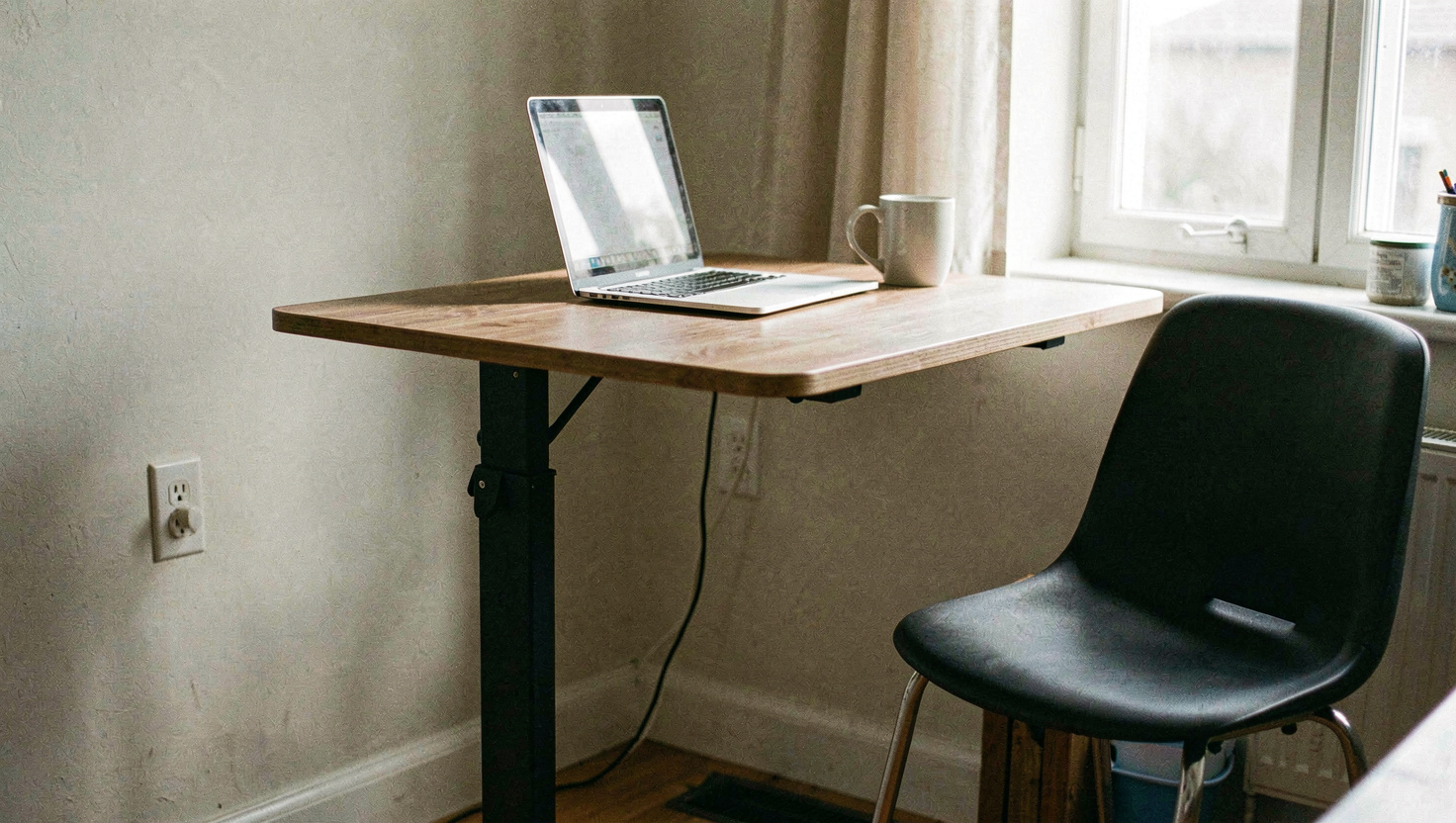
The standing desk arrived with a promise that it would replace sitting, and for most people who bought one it did that for about three weeks. Then it went down and stayed down. The interesting habit was never standing instead of sitting. It is switching between them, and switching is a different thing to design.
The wrong question
Standing all day is not obviously better than sitting all day. Anyone who has worked a shift behind a counter can confirm that a static standing posture has its own catalogue of complaints, most of them in the feet, calves and lower back. The person who stands at a desk for seven hours has swapped one fixed position for another.
What both share is the fixity. The body is not particularly interested in which posture you have chosen and is very interested in how long you have held it. That reframing makes the equipment question secondary, which is convenient, because the equipment is the expensive part.
Switching is the habit
A switch needs a trigger, and a timer is a poor one. Nobody keeps a timer running for a week, and a timer that interrupts a piece of concentrated work gets dismissed and then muted. The triggers that survived in our own week were all events that already happened.
| Trigger | Switch to | Why it holds |
|---|---|---|
| A call or a meeting starting | Standing | Happens several times a day, needs no keyboard |
| The kettle going on | Standing, then a short walk | You are already up |
| Coming back from lunch | Standing for the first block | The afternoon slump lands here |
| Anything requiring real concentration | Sitting | Fine motor work is easier seated |
Attaching the switch to a meeting is the version that worked best, because meetings are frequent, they are in the calendar and they require nothing of the hands. It is also the version that costs nothing at all if the desk does not move, since a phone call can be taken standing anywhere.
This is the same technique used throughout this magazine: hang the new habit on an old one rather than on an alarm. The general form is described in the entry on the size of a new habit, and the same trick powers the entry on drinking water without a target.
The body is not much interested in which posture you chose. It is very interested in how long you have held it.
Which tasks suit which posture
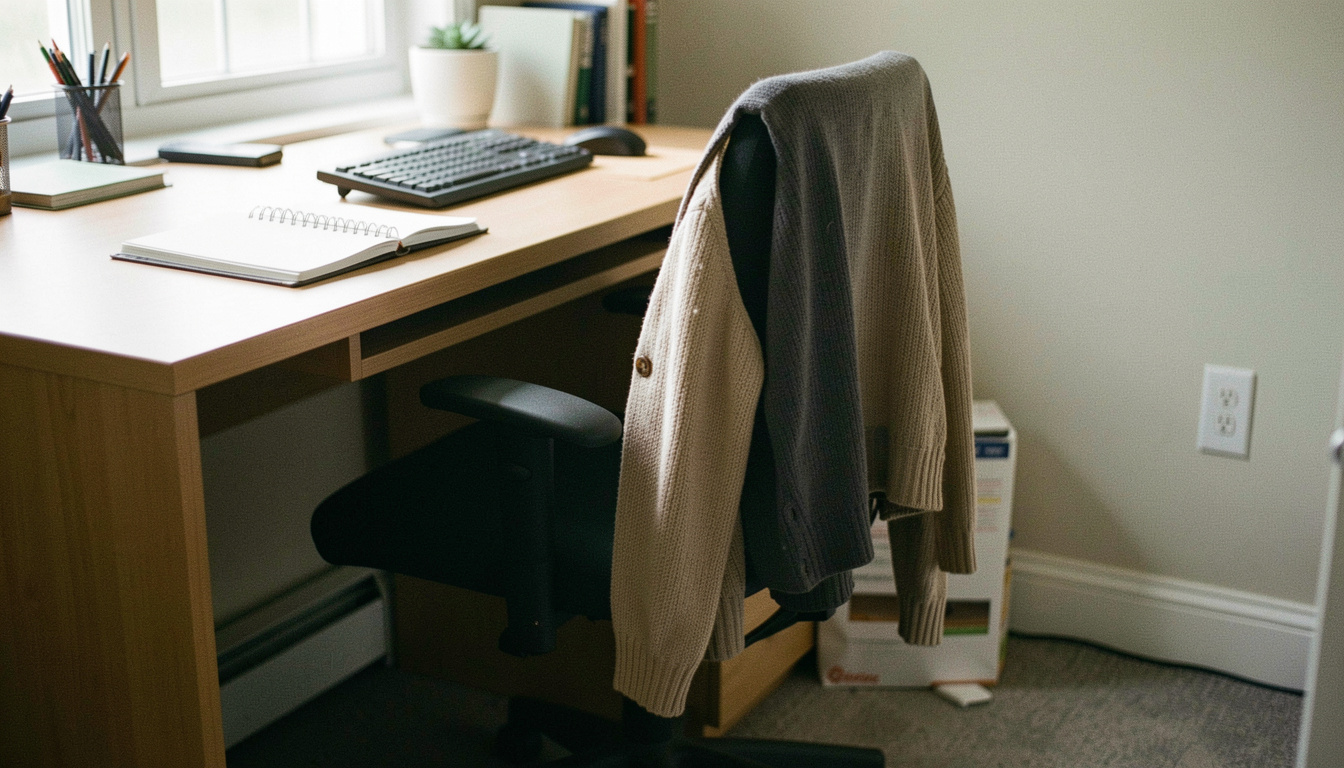
After a fortnight of paying attention, the split was fairly consistent. Standing suited calls, reading, email, anything that could be done in short passes, and the first twenty minutes after lunch. Sitting suited writing, anything numerical, anything requiring a mouse for a long stretch, and anything that needed to be got right rather than got through.
That is not a rule and it will differ by trade. The useful part is having any split at all, because a person who has decided which tasks belong to which posture no longer has to decide in the moment, and deciding in the moment is what stops the desk from moving.
Standing without a standing desk
Most people do not have a sit stand desk and are not about to buy one. The habit does not require it. Standing to take a call, standing at a kitchen worktop to read something on paper, standing at the end of a table for a short block, walking to a meeting rather than dialling in from a chair. Each of those is a switch, and switching was the point.
A worktop is worth a specific mention. Kitchen counters are close to a good standing desk height for many people, which makes them a serviceable second workstation for the reading half of a day. The screen height will be wrong, in the way described in the piece on desk adjustments made in order, but for twenty minutes of reading that matters much less than it does for three hours of typing.
Two footnotes from our own week. Standing on a hard floor for long blocks is uncomfortable quickly, and a mat or even a folded rug makes a surprising difference. And standing does not replace walking: ten minutes on a pavement does something a standing desk does not, which is the subject of the entry on short and long walks.
What we noticed
The pattern that emerged, without being planned, was roughly three switches a day rather than the many that any timer based system would have produced. Morning seated, a standing block over the first calls, seated through the middle, standing again after lunch, seated for the last stretch. It was not a schedule. It was the shape the day already had, with a posture attached to each part of it.
The honest report on the three o'clock feeling is that it moved rather than disappeared. Standing after lunch pushed it later and made it milder. What removed it entirely, on the days it was removed, was leaving the building for ten minutes, which is a slightly deflating conclusion for a section about furniture.
The stretches that go with all of this, and that fit into the ninety seconds between one meeting ending and the next beginning, are set out in the entry on a short stretch routine for desk days.
Read next
Before adding a rhythm, it is worth having the seated position right, which is the workstation entry.
The two minute version, for days with no room to move at all, is the short stretch routine.
Standing is not walking, and the difference is set out in the comparison of short and long walks.
A switch of posture is also a natural place to notice tension, which is the habit described in the entry on catching tension before it builds.