Building a Wind Down Routine That Actually Works
A wind down routine has almost nothing to do with sleep and almost everything to do with sequence. It is a short series of ordinary actions, done in roughly the same order, that tells a household the day has stopped being a working day. The individual actions are unremarkable. The order is the whole thing.
What a routine is for
People generally describe a wind down routine as a list of things they should be doing: herbal tea, reading, no phone, a warm shower. Written like that it reads as homework, and homework at half past ten is the reason most of these lists last four evenings. It helps to look at what the routine is actually doing rather than what it contains.
What it is doing is marking a boundary. A working day and an evening use the same rooms, the same chairs, often the same laptop. Nothing in the flat changes at six o'clock. Without some deliberate marker, the day simply carries on until the point where someone gets tired enough to stand up and go to bed, and the hour before that point is spent in the same posture and the same light as three in the afternoon.
Seen that way, a routine is a signal rather than a therapy. It does not have to be pleasant, restorative or fashionable. It has to be recognisable. The reason a sequence beats a single action is that a sequence is recognisable even when one part of it is skipped.
The order of the steps
The ordinary sequence, in the order we keep finding it, runs: light down, screen away, body slowed, room reset. It is worth taking those one at a time, because the order is not arbitrary.
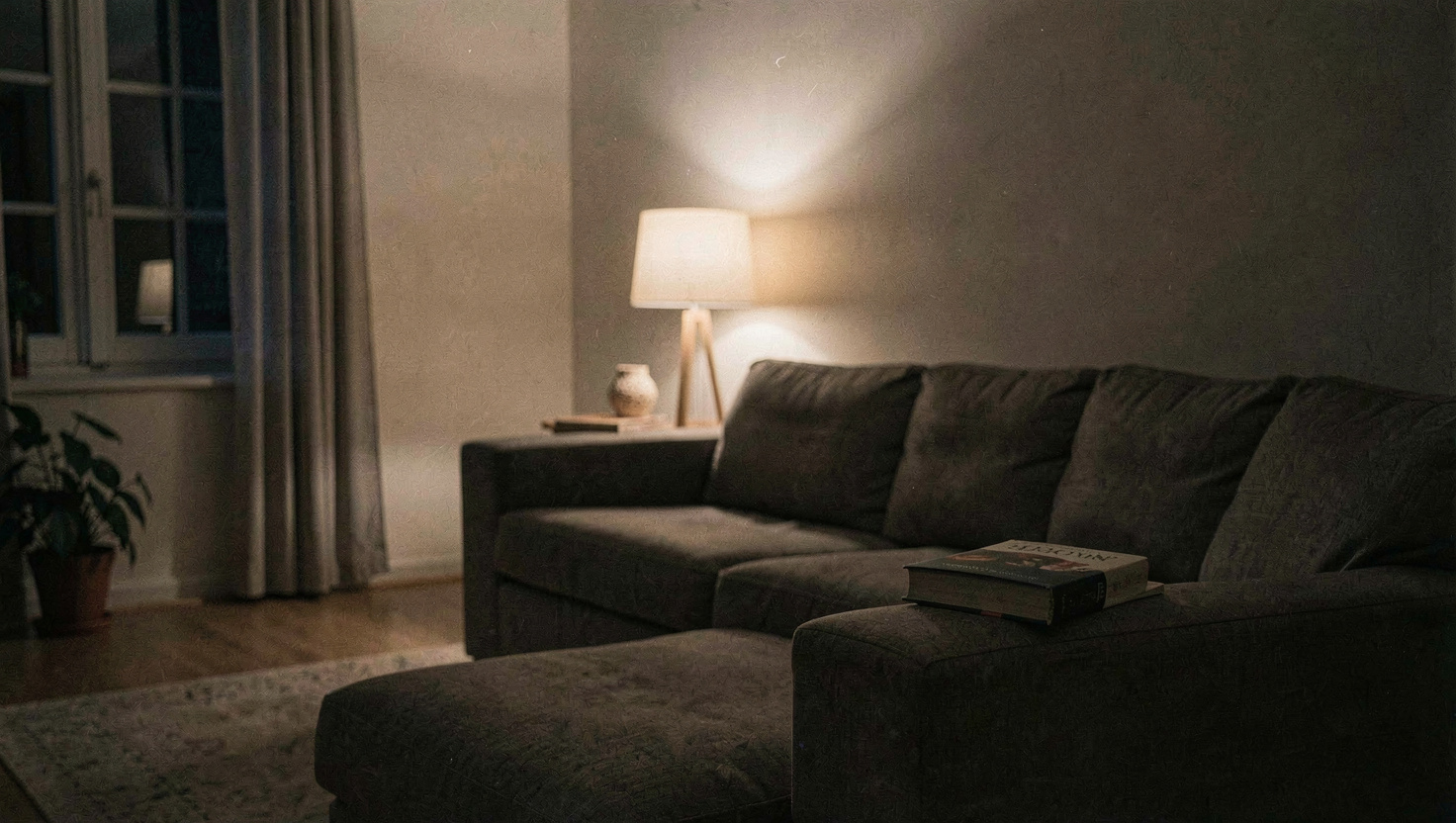
Light comes first because it is the cheapest and the most reliable. Turning off a ceiling fitting and turning on one lamp takes two seconds and changes the whole appearance of a room. It is also the only step that does not require anything of the person doing it, which matters at the end of a long day. If you want the full argument for lighting as a habit rather than a decor question, we set it out separately in the piece on how much daylight an ordinary flat actually gets and where to move a chair to catch it, which deals with the daytime half of the same problem.
The screen comes second rather than first because it is the hardest step, and hard steps are easier once the room has already changed. Putting a phone on a shelf in a brightly lit room feels like a punishment. Doing it in a room lit by one lamp feels like the obvious next move. We take the screen question apart on its own in the entry on what actually shifts when screens go away an hour before bed.
Slowing the body is third and it is the vaguest of the four. In practice it usually means sitting down somewhere that is not the desk, and it works best when there is a specific place to sit. Fourth and last is the room reset: four or five objects put back, the kitchen surface cleared, tomorrow's coat moved to the hook.
If the sequence ends and sleep still does not come, or you wake in the night and cannot fall back asleep, the next step is to identify whether the trouble is at onset or in staying asleep because each pattern points to different causes and responses. The guide to understanding onset and maintenance insomnia links difficulty falling asleep to anxiety, ruminations, screens or late stimulants, and night awakenings to fragmented sleep. That distinction helps decide which habit to correct rather than lengthening the routine.
The thirty minute version
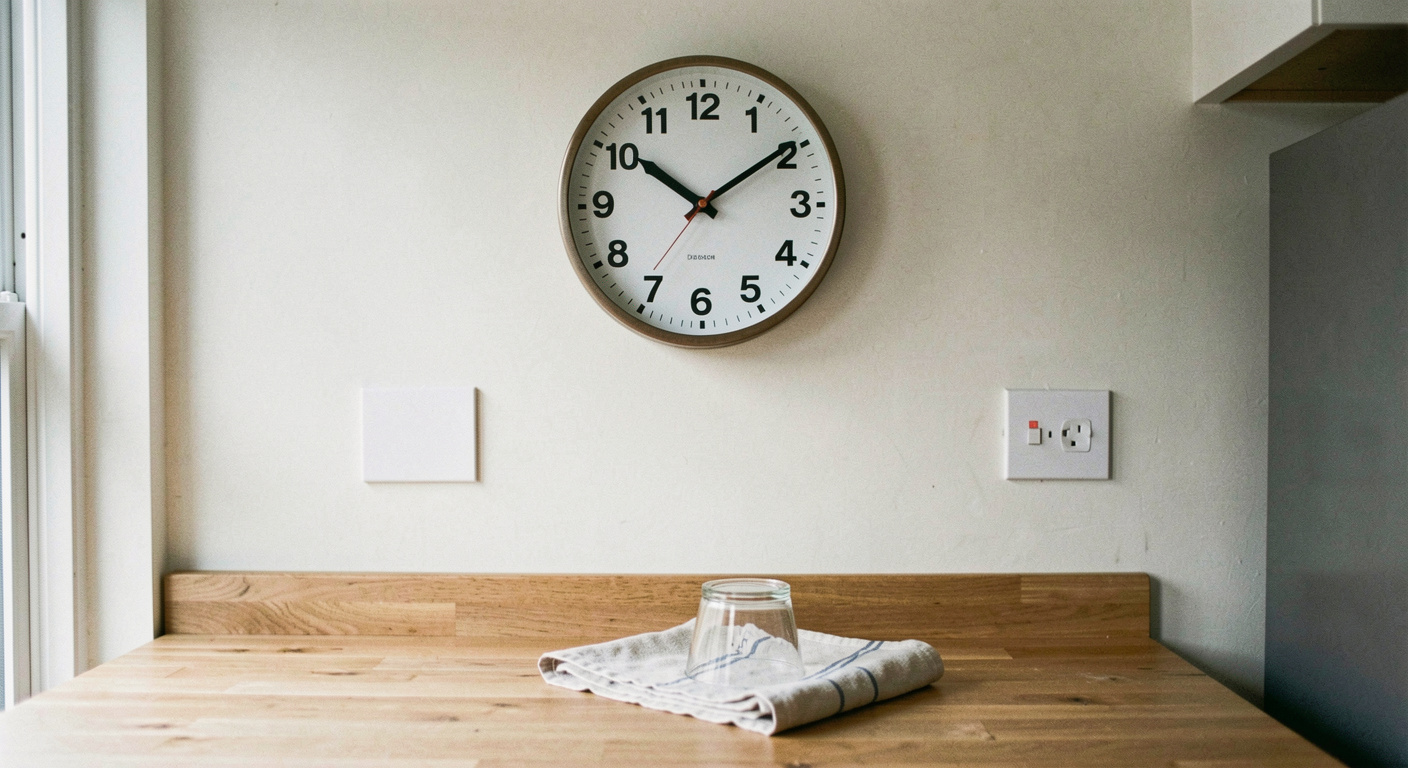
Half an hour is enough for all four steps and leaves room for one of them to fail. Written out, it looks like this.
| Minute | Step | What it is doing |
|---|---|---|
| 0 to 2 | Ceiling light off, one lamp on | The room stops looking like the afternoon |
| 2 to 5 | Kitchen surface cleared, tomorrow's bag by the door | Removes the small jobs that resurface at midnight |
| 5 to 10 | Phone on a shelf across the room, notifications silenced | Makes reaching for it a decision, not a reflex |
| 10 to 30 | Sitting somewhere that is not the desk, reading or nothing | The part that is actually rest |
A routine is not a list of good behaviours. It is a sequence a tired person can still recognise when three quarters of it has gone wrong.
What usually breaks it
Three things break a wind down routine, and none of them is a lack of discipline.
The first is that it has no trigger. A routine attached to a clock time fails on the evenings that run late, which are exactly the evenings it was designed for. A routine attached to an event, the last plate going in the rack, the front door being locked, the dishwasher starting, survives a late evening because the event still happens. That is the same mechanism we describe in the entry on shrinking a new habit down to two minutes so it can start on a bad day.
The second is that it is too long. A forty five minute routine with six components is a project. It gets postponed, and a postponed evening routine is simply an evening without one.
The third is that the evening was never really free. If work carries on until the moment the laptop closes and the laptop closes at eleven, no sequence of lamps is going to help. That is a boundary question rather than a sleep question, and it is the subject of our piece on drawing a line at a certain hour so the evening belongs to rest.
THE NEIGHBOURING HABIT
A wind down routine sets the shape of an evening, but it does not by itself set the shape of a week. The habit that does that sits at the other end of the night: getting up at roughly the same time whatever the previous evening looked like. We make that case in the entry on why a steady schedule tends to matter more than the number of hours logged, and the two habits reinforce each other more than either does alone.
The smallest workable shape
If the whole thing has to shrink to survive, it shrinks to two moves: change the light, put the phone somewhere that requires standing up. Both take under a minute in total, neither depends on mood, and together they change the appearance of the room and the reach of the hand, which are the two variables the rest of the routine was trying to influence anyway.
Everything else, the tea, the reading, the shower, is optional decoration on top of those two. Useful decoration, and pleasant, but not the load bearing part. A person who reads for twenty minutes in a room lit like an office with a phone face up beside them has not really wound down. A person who does nothing at all in a dim room with the phone across the room usually has.
What we noticed
Keeping the sequence for a fortnight in one household, the finding that surprised us was how much of the effect came from the room reset rather than from the restful parts. Clearing the kitchen surface took under three minutes and removed a whole category of late thought, the sort that starts with the words I should have. The reading, which we assumed would be the centre of the routine, turned out to be the step most often skipped and the one whose absence changed the least.
The other observation, less comfortable, is that the routine worked best on the evenings when it was least needed. On calm evenings all four steps happened. On the evenings that ran late, only the lamp survived, and the lamp survived precisely because it asked for nothing. That is a fair argument for keeping the sequence short: what you actually own is the part that still happens when the evening goes wrong.
Read next
The companion entry, on setting screens aside an hour before sleep, takes the hardest of the four steps and describes what genuinely changes when it is kept for a week.
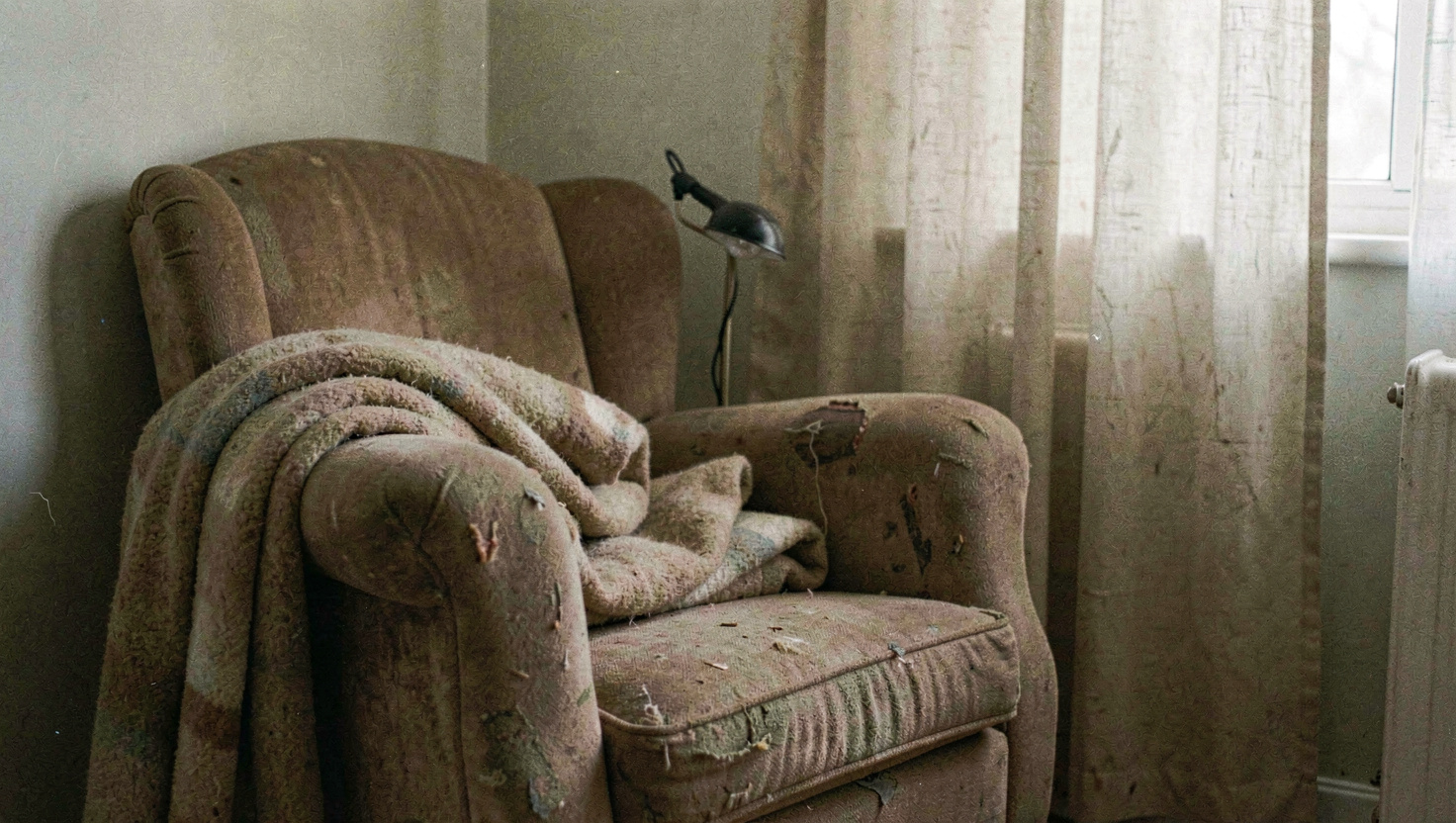
The wind down routine ends in a chair, so it helps to have one worth sitting in. Our piece on making room for a single quiet corner in a small flat is about that chair and nothing else.
If your routine keeps collapsing on busy evenings, the design problem is size rather than willpower, which is the argument of the two minute rule for starting a new habit.
For the hour that this routine occupies, our earlier entry on what the last hour before bed actually contains is where this line of writing started.