A Morning Routine Built for Bad Days
Most morning routines are designed on a good morning, by a person with time, and they work beautifully on other good mornings. The mornings they need to work on are the other ones: late, short of sleep, already behind. A routine that only runs when conditions are favourable is not a routine, it is a preference.
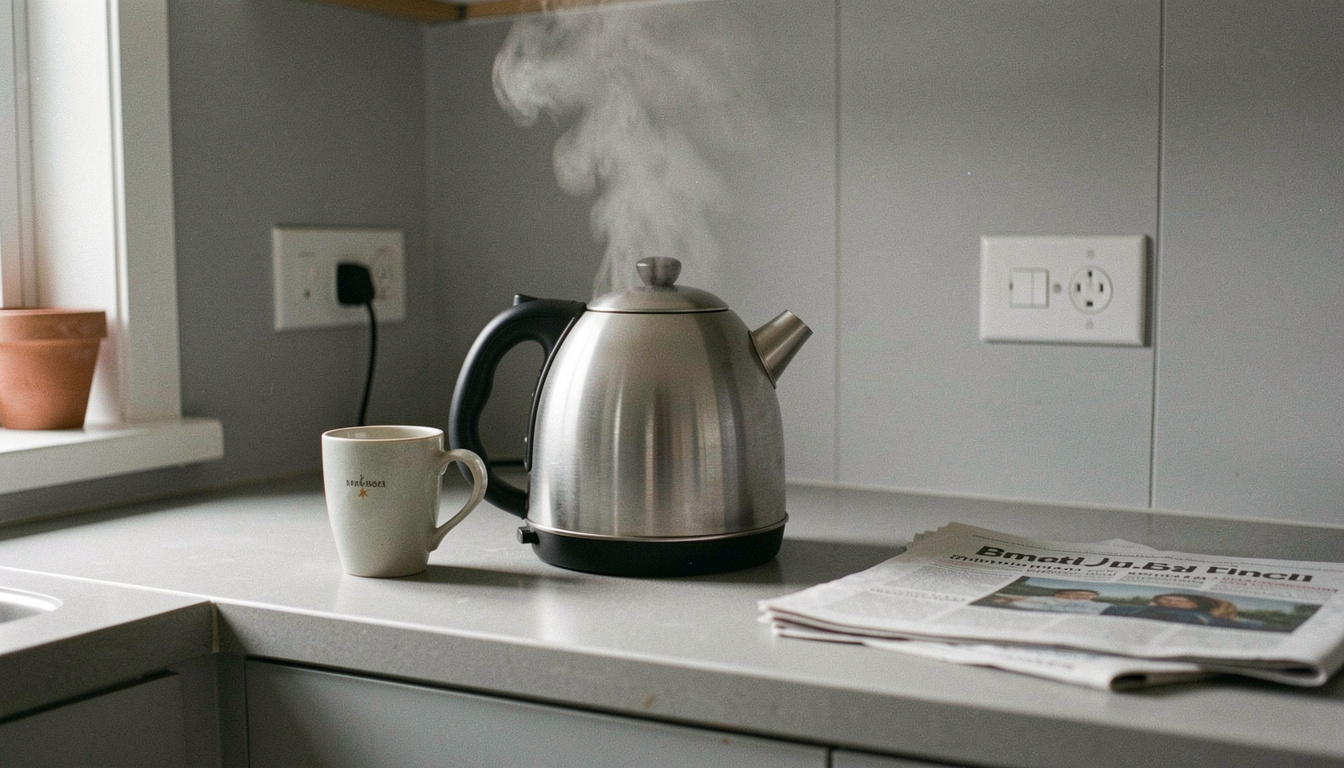
The routine and its floor
It helps to think of a morning routine as having two versions rather than one. The full version is what happens when there is time. The floor is the smallest version that still counts, decided in advance, and it is the one that actually determines whether the habit survives a month.
Without a floor, a bad morning produces a skip, and skips are contagious. Two skipped mornings in a row and the routine has effectively ended, at which point restarting requires the same effort as starting did, which is considerably more than keeping it going would have taken.
With a floor, a bad morning produces a small version. The chain is unbroken, nothing has to be restarted, and the full version returns by itself when the conditions do.
Deciding the floor in advance
The floor has to be chosen on a good day, in writing, and it has to be genuinely small. Almost everybody sets it too high the first time. A useful test is whether it could be done on the worst morning of the last three months, and if there is any hesitation the answer is to halve it.
It also has to be specific. Do something for myself is not a floor. Drink a glass of water while the kettle boils is a floor. The specificity matters because a bad morning has no capacity for interpretation.
This is the same design as the two minute rule and is the reason the two entries sit next to each other in this section. The general version is in our entry on the smallest workable version of a habit, and the morning is simply where it is tested hardest.
Set the floor on a good day, in writing, and then halve it.
Three floors that worked

| Full version | Floor | Time |
|---|---|---|
| Breakfast at the table, cooked | Yoghurt and oats eaten sitting down | Two minutes |
| Twenty minutes of walking before work | Curtains open, two minutes at the window | Two minutes |
| Bed made, room tidied | Duvet pulled straight | Fifteen seconds |
The first floor is the one we would defend hardest. A cold breakfast eaten sitting at a table takes two minutes and preserves the meal habit, and it is exactly the assembly described in our entry on a breakfast worth repeating, which was designed with bad mornings in mind.
The second is a substitution rather than a reduction. Two minutes at an open window is not a walk, but it keeps the daylight part of the habit alive, and daylight early in the day is the piece with the longest reach into the rest of it, as discussed in the entry on light exposure.
What a bad morning removes
It is worth being precise about what actually disappears on a difficult morning, because it is not willpower in any general sense.
What disappears first is decision making. Anything requiring a choice, what to eat, which route, whether to bother, gets resolved as no. That is why every floor above is a single fixed action with no options in it.
What disappears second is anything requiring assembly. If the ingredients are in three cupboards, breakfast does not happen. If the shoes are upstairs, the walk does not happen. This is a logistics problem masquerading as a motivation problem, and it is solved with placement, in the way described in the entry on doing one shelf at a time.
What survives longest is anything physical and already in position. The lamp, the kettle, the shoes by the door, the jug on the table. Objects are more reliable than intentions on a bad morning by a very wide margin.
The night before, again

A great deal of what makes a morning difficult is decided the night before, and not only through sleep. The bag not packed, the table not laid, the kitchen not cleared, the clothes not chosen. Each of those is a decision that has been postponed into the least capable hour of the day.
Two minutes in the evening buys considerably more than two minutes in the morning, which is why the room reset is the fourth step of the sequence in the entry on building a wind down routine. The evening version of the same argument, about where the working day is allowed to end, is in the entry on protecting an evening.
The other half is the waking hour itself. A routine has to have time in which to happen, and a morning that starts at a different hour every day cannot hold one. That is the case made in the entry on consistency over hours.
What we noticed
Over a fortnight there were four mornings we would describe as bad, which is a fairly ordinary proportion. On three of them the floor version happened. On the fourth nothing happened at all, and the following morning the full version returned without any particular effort, which we take as evidence that one missed morning is not the same as a broken habit unless it is treated as one.
The floor that held best was the duvet, because fifteen seconds is not really a decision. The floor that held worst was the window, which was skipped twice on the mornings that were both late and dark, and those are precisely the mornings it was written for. We would rather record that than pretend the system was airtight.
The most useful thing we can report is not about mornings at all. It is that having a pre agreed reduced version changed how a missed day felt. Nothing was broken, so nothing had to be restarted, and that is the entire practical benefit of thinking in floors rather than streaks, which is the subject of the next entry in this section.
Read next
The general principle behind every floor above is set out in the piece on making a new habit small enough to begin.
Thinking in floors only works if the record keeping is loose, which is the argument of tracking habits without obsessing over streaks.
The cold, two minute breakfast that keeps the meal habit alive is described in the entry on assembling breakfast without deciding.
A morning routine needs a morning of roughly predictable length, which is the case made in the entry on sleep schedules.
Colour choice starts with the hair you already have, not the shade on a box. In daylight, note the natural depth at the roots, any grey, and how porous the ends feel; porous hair takes colour faster and darker. Strand tests on a hidden section tell you more than any chart. Between appointments, wash less often, use cooler water, and keep heat tools low. A calm routine holds the tone longer. For a closer look at colouring hair at home, the magazine's habits section covers reading your hair before dyeing and keeping the colour steady.